Helpful Information
New Sign
Lovira Lydia (Parks)
Allen
If you have information about this person that is not listed, you may submit it in the forms at the bottom of this page. We accept family tree information, obituaries, photos, stories, condolences, and more. Thank you for helping us keep their memory alive!
Birth: 11/11/1857
Death: 4/15/1953
Plot Location
Relatives
Allen, Richard Eliada
Allen, Baby Son
Allen, Terry B.
McCants, Gertrude E. (Allen)
McGuire, Charles Franklin
McGuire, Blanche Rose (Allen)
McGuire, Dennis Charles
Miller, Michael Charles
Parks, Morgan Stamper
Hasson, Donna Rose (McGuire)
Allen, Silas Engal
Allen, Amelia Eveline (Blakesley)
Obituary/Documents
Stories & Condolences
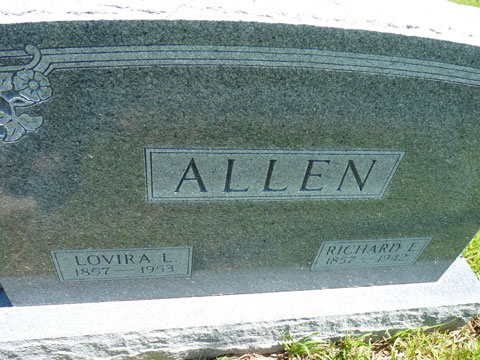
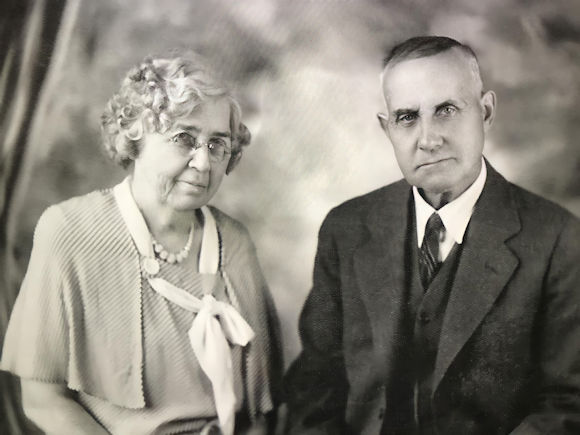
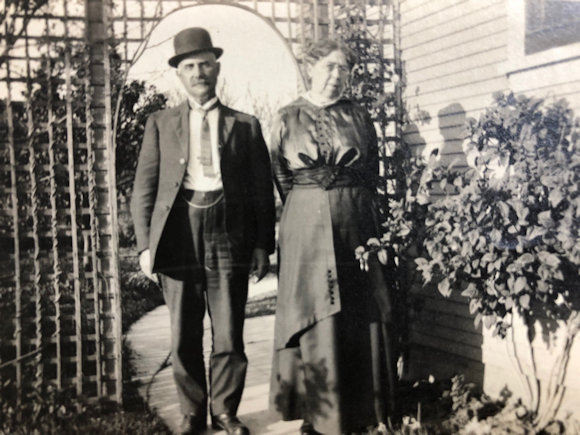
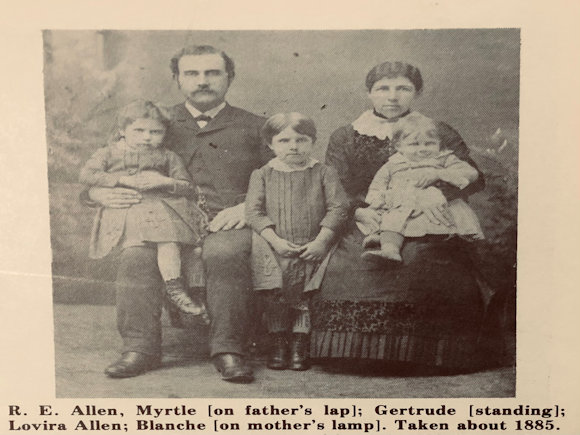
"RICHARD E. and LOVIRA L. ALLEN THE FIRST HOMESTEADERS AND FOUNDERS OF ARNOLD Richard Eliada Allen was the first homesteader, early postmaster, merchant, stockman, farmer and the founder of Arnold, Nebraska. He became a successful man of Custer County with large land holdings including (within the first two homesteads) what is now much of Arnold’s town site. Over the years Richard served as Constable and member of the Town Board, School Board, Methodist Church Board and Cemetery Board to cite just a few. To top it off he played the big drum in the town band. A 1936 publication on the history of Custer County stated, “In all his work he always carried on his transactions and conducted himself personally in a manner that won and held for him the respect and esteem of his fellows, and his life record has been unmarked by stain or blemish”. Richard was born April 21, 1857 on a farm in Mount Morris, New York. He was the third of six children of Silas E. and Evaline Blakesley-Allen, also natives of New York. The Allen family has long been established in what is now the United States having arrived in the mid 1600’s. When Richard was one year old, the family moved to Alivra in Clinton County, Iowa. When he was six, they moved to Linn County, Iowa where the family purchased 160 acres of prairie land and settled in. While growing up he attended public school and learned the vital discipline of hard work on the family farm. As a young boy, he “earned” his first money by shocking wheat and was promised fifty cents a day. This was arduous and dusty work and through a misunderstanding he failed to get his money. Bitter disappointment made such an impression that he remembered it for the rest of his life. He maintained from this experience that he would be careful when making promises to his children and all others throughout his life. Richard lived on his family’s farm until he married Miss Lovira Lydia Parks on December 8, 1878 in Monroe Township, Benton County, Iowa. Lovira was born November 11, 1857 and was also from Linn County. She was the daughter of Morgan S. and Lydia (Harris) Parks who were natives of Indiana and London-Ontario, Canada, respectively. Like the Allen family the Parks arrived to what is now the United States in the early 1600’s. The Allens were eager to take advantage of opportunities they envisioned to the west. They believed the 1862 Homestead Act was the answer. The Federal government’s act allowed the head of a household, man or woman, over age 21 to claim 160 acres of government land and receive free title to that land after living on it for five years. The Homesteader needed to improve the land by cultivating it and building a home. With this opportunity, they could acquire a homesite and farmland to support them and their growing family which now included their first child Gertrude (Gertie), born September 6, 1879. After studying the Homestead Act, they planned, saved, packed belongings and said their goodbyes to family and friends. On April 7, 1880, the Allens departed with their loaded Prairie Schooner wagon. The wagon was well made, organized and covered with good quality sections of canvas. The wagon box floor was about 44 square feet and was two to three feet tall. Sections of the canvas could be opened and closed depending on the weather. Inside was a small cast iron cook stove and a collapsible table that converted into a bed. Belongings included a mirror that was a wedding gift, a steamer trunk filled with clothing, guns for hunting and protection, plus comfortable feather cushions atop additional boxes filled with essential items. In Iowa, they were surrounded by churches, good schools and community activities, yet the Allen’s headed west with the packed wagon, three horses, daughter Gertie and Lovira’s younger sister Josephine. Heading Southwest toward Decatur County Kansas, the trip in the wagon was slow and difficult. The weather was extremely hot, and they experienced relentless wind. When they arrived in Decatur County, they found it dry and unsuitable, so they moved on. Travelling Northeast, they reached Red Willow County Nebraska, but found drought conditions more severe than in Kansas. Finding little future there they instinctively headed North hoping to find more favorable conditions. The route traveled went through Kearney and they followed the South Loup River to wherever it might lead them. It was late May 1880 when, after several long weeks of travel over rough ground and tall grass, they stopped in an open area near the river and made camp close to where downtown Arnold now sits. It was open land, they had water and Richard believed the soil to be suitable for farming. The family journey took seven weeks and they had travelled close to 700 miles. In 1880 there were more than 60,000 cattle in Custer County. The Allens soon learned there were two large cattle companies in the immediate area of their camp and from the start they were not welcome. At the time there were conflicts throughout Nebraska between cattlemen and the “grangers” as the farmers were called. Great herds fed on free pasture and the grangers farms would deprive the herds of these resources as cattle ranchers settled in where they found the best natural grass and plenty of water. The cattlemen would tell the Allens “It is too dry to farm here and the summer is so dry it is only fit for cattle-ranges”. The cattlemen repeatedly rode up and warned and even threatened them to move on. Discouraged and fearful the family packed up and started back down the river. Soon they turned around and returned to their camp site angry at themselves and the cattlemen. They knew they had found great land and vowed to not give up their dream. In due time the cattlemen learned that Lovira possessed, and was well versed in, herbal remedies. She tended to sick and injured cattlemen and soon they became friendlier. Lovira was often called upon when help was needed by new residents in the area as well. Lovira would nurse the sick, lay out the dead for burial and lend comfort to the living as best she could. Not long after they returned to the campsite the wagon was pulled nearer the river and the covered box was removed from the chassis. The wagon box became a shelter for the family until a small sod house could be built. The family was alone for many weeks when Lovira’s father, Morgan S. Parks, arrived in Cozad by train. Richard met him and they returned to the family camp. Morgan was a Civil War combat veteran from Company E of the 4th Regiment of the Iowa Infantry. He owned a good compass and had knowledge of surveying and engineering. Together they completed a detailed survey of the land so the necessary government documents for the Allen’s homestead could be filed. These filings made record of them as the original homesteaders of the area. Taking advantage of Morgan’s skills and strong back, he and Richard built the small sod house. They now had a home that would be comfortable in the coming winter. Weather helped Nebraska homesteaders in their struggles with cattlemen when harsh winters of 1880-1881 and 1883-1884 arrived. The winter of 1880-1881 hit the area with deep snow and prolonged bitter cold that was devastating to the herds. Temperatures held from ten to twenty below for weeks and the ground was covered in thick layers of frozen grass, ice and snow until spring. These circumstances prevented thousands of cattle in the area from finding food and two thirds of them died and many cattlemen were ruined. Farming and ranching were what the Allens hoped to engage in so during the long winter they started planning. In the early spring of 1881 members of the local cattle company and George Arnold asked Richard to take over as postmaster from his sod house. George was the previous postmaster and friend of Richards. He told the Allens he was leaving the area and would not be returning. The Allens saw an opportunity to combine the post office with a store that could fill two much needed services for the area while supporting their growing family. Their second daughter, Myrtle (Mertie), was born on February 28, 1881. This meant they would need to modify their plans of full-time farming. To earn money to purchase merchandise for the store a new plan was made. With no timber stands in the area Richard would leave the family for several days to cut cedar trees miles away. He would turn the cut cedars into posts and haul them about 90 miles to Kearney. There he would sell or trade for the goods needed to offer in his store. He earned $100 for his first load of posts and with it he stocked up on merchandise. The locals soon cleared out the store. Richard continued this practice but went to Cozad instead to trade and stock up since Cozad was about half the travel distance. Lovira managed everything at home which included caring for the children, post office, store, garden and animals. While running the post office and store they continued working the land to comply with the Homestead Act and earn additional money. During the winter they had also made plans for a larger home, this one built of logs. Richard traveled to the Dismal River and Pine Canyon north west of Callaway. He would down the trees, load them and return home, repeating this process several times. Lovira knew about when he would return and would watch for him on the horizon. When she would see him coming over the distant hills in the wagon, she would finish chores and prepare the evening meal. By the time he arrived and tended to the horse’s the family meal would be enjoyed. The log cabin had three windows, a nice door, and a porch for added convenience. The new home was completed on August 22, 1881 near what is now the western corner of South Broadway Street and West Arnold Avenue. On August 15, 1883 daughter Blanche Rose (Rosie) was born. The Allen’s business was thriving in a larger pioneer store they had built downtown that same year. In March of 1891, the Allens son Lottie was born. Sadly, Lottie died in November of that year. In mid-1892, with other businesses in town to fill the resident’s needs, they closed the store, sold the building and set their efforts to full time farming and ranching. This being the reason they settled in the area over a decade earlier, it was a welcome change. Over the years it became a large-scale and rewarding operation with over two thousand acres of land throughout the family Homesteads in Custer and Logan counties. In 1905, when they were 48 years old, they took in a young boy named Terry as a foster son. Terry was born July 3, 1900 and had been living it the Christian Home in Council Bluffs, Iowa and was later adopted by the Richard and Lovira. Terry died in March 1918 of a gunshot wound while in Douglas, Wyoming and is buried in the Arnold Cemetery. In 1908, an elegant two-story Victorian style home was built for the family with materials freighted from the railroad station at Callaway. It was a beautiful large home with a spacious wrap around porch. In 1917, a large one-story craftsman style house was built just to the north of the Victorian that became the Allen’s retirement home. Charles and Blanche (Allen) McGuire moved into the Victorian and there they raised their four children: Edgar Allen, William Finch, Mildred Genevieve and Charles Richard. The Craftsman home was moved and, as of this writing, is now in Stapleton. In the late 1960’s, the Victorian home was torn down to make room for the Arnold Town Hall. The barn was about where the town’s swimming pool is. Richard and Lovira were married for 64 years until Richards death on September 15, 1942. He was 85 years old. Lovira remained in Arnold and died at the age of 95 on April 15, 1953. Both are buried in the Arnold cemetery as are Gertie (Allen) McCants, Rosie (Allen) McGuire and Lottie Allen. Mertie (Allen) Chadima is buried with her husband in Cedar Rapids, Iowa. On June 22, 1910 Blanche R. Allen married Charles F. McGuire who was raised north east of Arnold in Powell Canyon. Charles was the son of early Arnold pioneer homesteaders John H. and Anna A. McGuire who arrived in 1884. The four children born of this 59-year marriage were the only grandchildren of Richard and Lovira Allen. The 11 Great Grandchildren of the McGuire-Allen marriage were fortunate to visit Arnold often throughout their lives and were raised hearing many stories of their ancestor’s lives. They viewed many pictures of Richard and Lovira, the extended family and the town of Arnold that they so loved. These pictures and other treasures of the past are cherished by those that are entrusted with their care. All are grateful, respectful and immensely proud of the pioneer heritage they share." - Dennis McGuire